Autonomous Hospital Delivery Robot Internal Medical Logistics & Pharmacy Transit
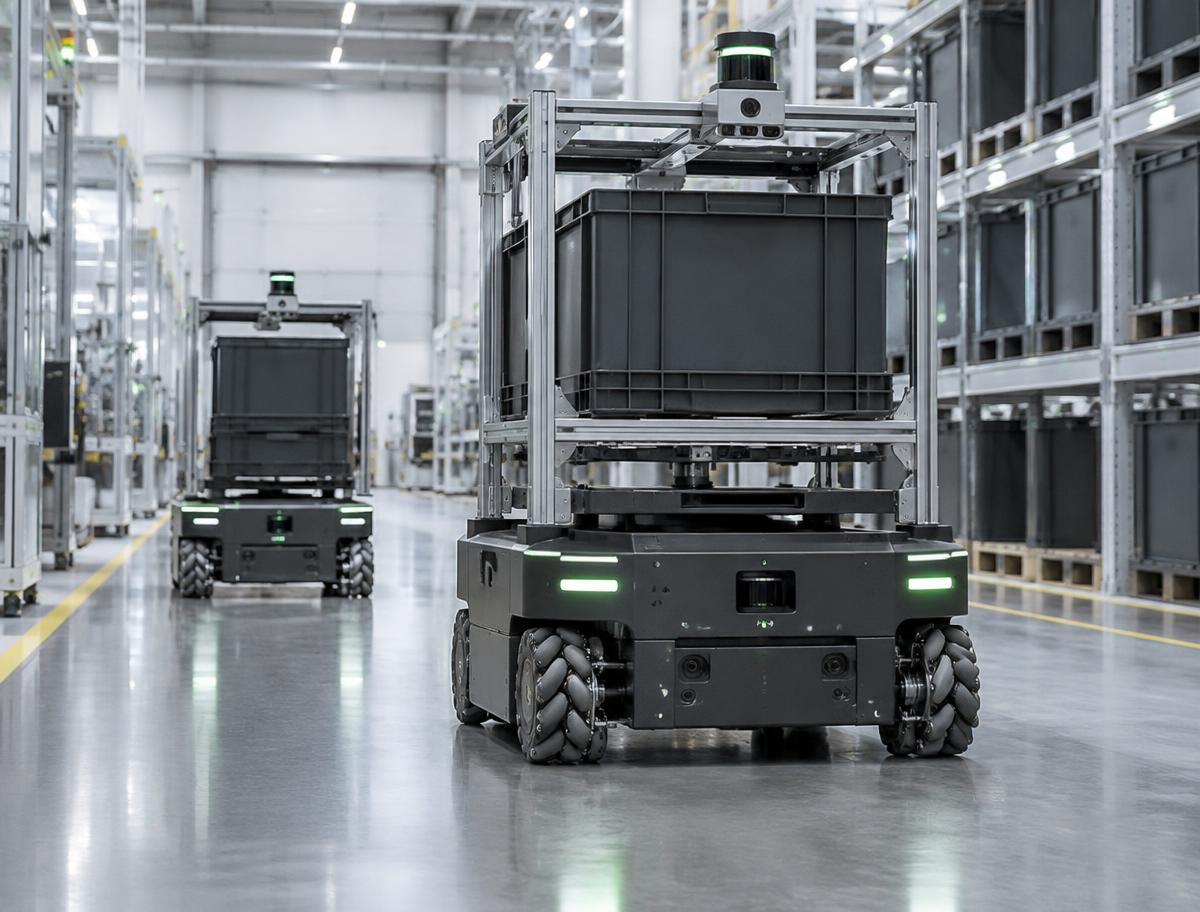
An autonomous indoor hospital delivery robot that transports medicines, medical supplies, pathology specimens, documents and reports between hospital departments safely and securely.
The Hidden Burden in
Hospital Internal Logistics
Hospitals operate 24/7, yet thousands of skilled clinical hours are drained by manual foot messenger rounds. When nurses and technicians become couriers, patient response times suffer and operational costs soar.
Nursing Transit Fatigue & Burnout
Registered nurses walk an estimated 4 to 5 miles per 12-hour shift running errands to retrieve IV bags, routine pharmaceuticals, and linen rather than providing bedside care.
Delayed STAT & Emergency Deliveries
Critical STAT medication orders for the ICU, ER, or surgical suites sit in pharmacy queues waiting for available human porters during peak shift changeovers.
Specimen Chain-of-Custody Vulnerabilities
Hand-carried blood samples, pathology biopsies, and sensitive patient records lack digital tracking during transport between wards and centralized laboratories.
Inter-Floor Transit & Elevator Gridlock
Human runners pushing manual carts must wait alongside patients, visitors, and emergency gurneys for elevators, multiplying transit friction across multi-wing facilities.
Support Staff Shortages & High Turnover
Hospitals face persistent vacancies in internal logistics and portering roles, forcing skilled medical staff to cover courier duties.
How The Hospital Delivery Robot
Functions as a Clinical Assistant
Engineered exclusively for active healthcare facilities, the INDUS Hospital Delivery Robot coordinates silent mobility, certified patient safety, encrypted chain of custody, and autonomous multi-floor transit.
Secure Multi-Tier Smart Lockers
Modular, independently lockable compartments with digital solenoid latches prevent unauthorized access to schedule medications, narcotics, and confidential patient records during transit.
Core Medical Engineering Modules
Clinical Operational Specifications
Compartment opens only when the designated nurse scans their credentials at the destination ward, automatically logging the exact delivery timestamp and badge ID.
How It Works:
8-Stage Medical Delivery Flow
From pharmacy order generation to bedside nurse verification, every transit leg executes with biometric security, elevator autonomy, and complete chain-of-custody auditability. Click any stage to inspect the technical data contracts.
Autonomous Corridor Navigation
The robot navigates hospital corridors smoothly at whisper-quiet speeds, dynamically rerouting around gurneys, cleaning carts, and walking patients while maintaining certified safety clearances.
Continuous 360° dual planar LiDAR point clouds, 3D depth camera frames, and IMU odometry
Real-time costmap generation, dynamic pedestrian velocity extrapolation, and smooth jerk-free trajectory interpolation
Safe, uninterrupted transit at 0.8–1.2 m/s governed clinical corridor speed
Key Features Engineered for
Demanding Hospital Operations
Every subsystem is built to rigorous clinical standards, prioritizing patient comfort, biochemical containment, data security, and seamless multi-floor transit.
Multi-Tier PIN & RFID Smart Lockers
Independently locked modular compartments with electronic solenoid deadbolts and tamper detection protect schedule medications, chemotherapy, and patient charts.
Autonomous Elevator & Door Interfacing
Wireless BACnet/Modbus IoT bridge communicates directly with Otis, Schindler, KONE, and ThyssenKrupp elevator banks and automatic cleanroom airlock doors.
360° LiDAR & Patient Clearance Suite
Dual safety-rated planar LiDAR scanners paired with 3D time-of-flight depth cameras ensure safe operation around wheelchairs, IV poles, and patient gurneys.
Antimicrobial Cleanroom Enclosure
Constructed from medical-grade antimicrobial ABS polymer housing sealed against disinfectant ingress. Surfaces withstand daily hospital-grade chemical wipe-downs.
STAT Emergency Priority Dispatch
Emergency medication orders for the ICU, ER, or cardiac units preempt routine supply runs, calculating the fastest unobstructed corridor path.
Temperature-Monitored Biological Transit
Optional active thermal telemetry compartment maintains calibrated refrigeration (2°C to 8°C) for blood products, pathology biopsies, and specialized vaccines.
Cryptographic Chain-of-Custody Audit
Millisecond-precision immutable event logging tracking loading technician, transit route, door seal verification, and receiving nurse digital signatures.
Hospital EHR & Pharmacy Workflow Bridge
Direct API and HL7 / FHIR interfaces integrate with hospital information systems (Epic, Cerner, Meditech) and automated pharmacy dispensing carousels.
Technical Architecture:
9-Layer Hospital Logistics Flow
A secure architecture connecting low-level corridor perception to hospital EHR systems. Click any architectural layer to inspect its technical data contracts and protocols.
Indoor SLAM & Nav2 Planner
Subsystem Overview
High-precision localization and navigation stack utilizing laser-inertial odometry and dynamic multi-layer hospital costmaps.
Plans smooth, jerk-free navigation paths through multi-wing corridors, automatically detouring around temporary cleaning signs and gurney congestion.
Laser scans, floor plan vector map, target clinic waypoint coordinates
Dynamic obstacle avoidance velocity profiles and turn steering commands
Proposed & Validated Technologies
Proposed & Compatible
Clinical Technology Architecture
The INDUS Hospital Delivery platform integrates standard healthcare protocols, open robotics frameworks, and secure access hardware to guarantee seamless deployment into existing hospital infrastructure.
Hardware & Clinical Mobility
Physical drive base, whisper-quiet motors, cleanroom casters, and multi-tier electronic smart lockers.
360° obstacle clearance certified to ISO 13849-1 PLd
Ultra-quiet (<48 dB) high-torque motors with regenerative braking
Independently lockable compartments with electronic solenoid latches
Peltier-cooled 2°C–8°C storage for biologicals and blood products
Automatic opportunity charging without exposed electrical contacts
IP54 fluid-resistant body withstands daily hospital disinfectant wipes
Perception & Indoor SLAM
Deterministic robotics middleware, indoor laser odometry, and dynamic hallway obstacle avoidance.
Deterministic real-time publish-subscribe robotics middleware
Corridor path planning, multi-costmap generation, and dynamic replanning
Centimeter-level indoor localization using natural structural features
Limits velocity to 1.2 m/s; soft deceleration around pedestrians and beds
Security & Chain of Custody
Identity verification, cryptographic audit trails, and tamper-resistant access control.
Hospital staff badge authentication (Mifare, HID iClass)
6-digit nurse PIN entry and interactive delivery sign-off
Cryptographic storage of chain-of-custody signatures and encryption keys
Real-time door contact switches and forced-entry alarm triggers
Healthcare Informatics & IoT
Multi-vendor elevator integrations, hospital EHR bridges, and clinical notification pagers.
Autonomous wireless elevator summoning and airlock door control
Bi-directional transport order sync with Epic, Cerner, and Meditech
Automated arrival pings to nurse Vocera badges, pagers, and mobile apps
Role-based biomedical engineering dashboard and compliance reporting
Hospital Fleet Telematics &
Live Mission Dispatch Center
Experience the simulated hospital operations console used by pharmacy directors and ward managers to monitor autonomous deliveries, compartment locks, and STAT turnaround.
Clinical Environments &
Specialized Adaptations
Whether deployed across a 1,000-bed academic medical center or a specialized regional pathology laboratory, the INDUS Hospital Delivery platform configures to meet strict clinical hygiene and speed requirements.
Multi-Wing Tertiary Hospitals
Large acute care hospitals with sprawling multi-story layouts where routine nurse foot messenger errands create massive fatigue and delay urgent medication administration.
Engineering & Protocol Adaptations
Clinical & Operational Value
Hospital Staff Time &
Logistics Payback Calculator
Quantify the hours returned directly to patient care by offloading routine pharmacy, linen, and pathology errands to autonomous delivery robots.
Clinical Value & Financial Breakdown
450-Bed Tertiary Hospital
Clinical Logistics Simulation
Examine a representative hospital deployment model showing how a multi-tower academic medical center deployed autonomous mobile delivery robots to reclaim nurse bedside time and accelerate STAT medication dispatches.
Over 2,400 monthly courier hours redirected to bedside patient care
Reduced from 48 minutes down to 12.4 minutes for emergency ICU orders
Zero lost medication or specimen chain-of-custody disputes across 6,000+ dispatches
Rapid capital amortization based on courier staffing reduction and overtime savings
Pre-Deployment Hospital Bottlenecks
A 450-bed academic teaching hospital featuring two 7-story patient towers struggled with severe porter shortages and inter-floor delivery delays during peak clinical shift changes.
- Nurses walked 4.8 miles per shift fetching routine medications and IV fluids
- Emergency STAT pharmacy deliveries averaged 48 minutes during 2 PM peak handover
- Porters frequently caused corridor congestion waiting for passenger elevators
Autonomous Clinical Rollout
The hospital commissioned a fleet of four INDUS Hospital Delivery Robots integrated directly with the central pharmacy carousel, four passenger elevators, and nurse pagers.
- Autonomous multi-floor navigation through BACnet elevator summoning
- Multi-tier electronic smart lockers requiring nurse badge tap to release
- Automatic Vocera pager chime notifying nurses upon robot arrival at ward
Measurable Clinical Impact
Within 120 days of commissioning, the medical center reported substantial nurse satisfaction improvements, near-instant STAT delivery turnaround, and reduced overtime.
- 68% drop in nurse courier walking steps, returning 80+ daily hours to bedside
- Zero safety incidents or patient collisions across 4,200 operating hours
- System fully amortized in 7.2 months through courier overtime reduction
Evaluate Autonomous
Hospital Delivery
Schedule an exploratory consultation with an INDUS healthcare robotics specialist. We evaluate corridor traffic, elevator dispatch interfaces, and calculate precise nursing hours reclaimed for your healthcare system.
Ready to Return Hours to Bedside Nursing?
Connect directly with an INDUS healthcare robotics specialist to assess elevator telemetry, pharmacy workflow integration, and corridor feasibility for your hospital.