INDUS
Precision Motion & Automation
ISO 9283 / DIN 3990 / IEC 600344 Verified Products

Robotic Wheels

Mobility for autonomous industrial platforms.

Wheels and drive modules determine how a mobile robot moves, turns, and carries load. AGVs following fixed routes, AMRs navigating dynamic environments, and inspection platforms working in confined aisles all place different demands on traction, manoeuvrability, and drive layout. Omni and Mecanum arrangements allow sideways and rotational movement without changing heading, which can be valuable where floor space is limited.
Verified Ranges4 Models
Product Families4 Architectures
Traceability100% Calibrated
Robotic Wheels industrial component
Verified Industrial HardwareISO Compliant
Section B: Technology Navigation•Filter by Product Family
4 Configured Mechatronic Subfamilies
Family:
Sort:
Showing 4 of 4 verified products
Adheres strictly to verified datasheets
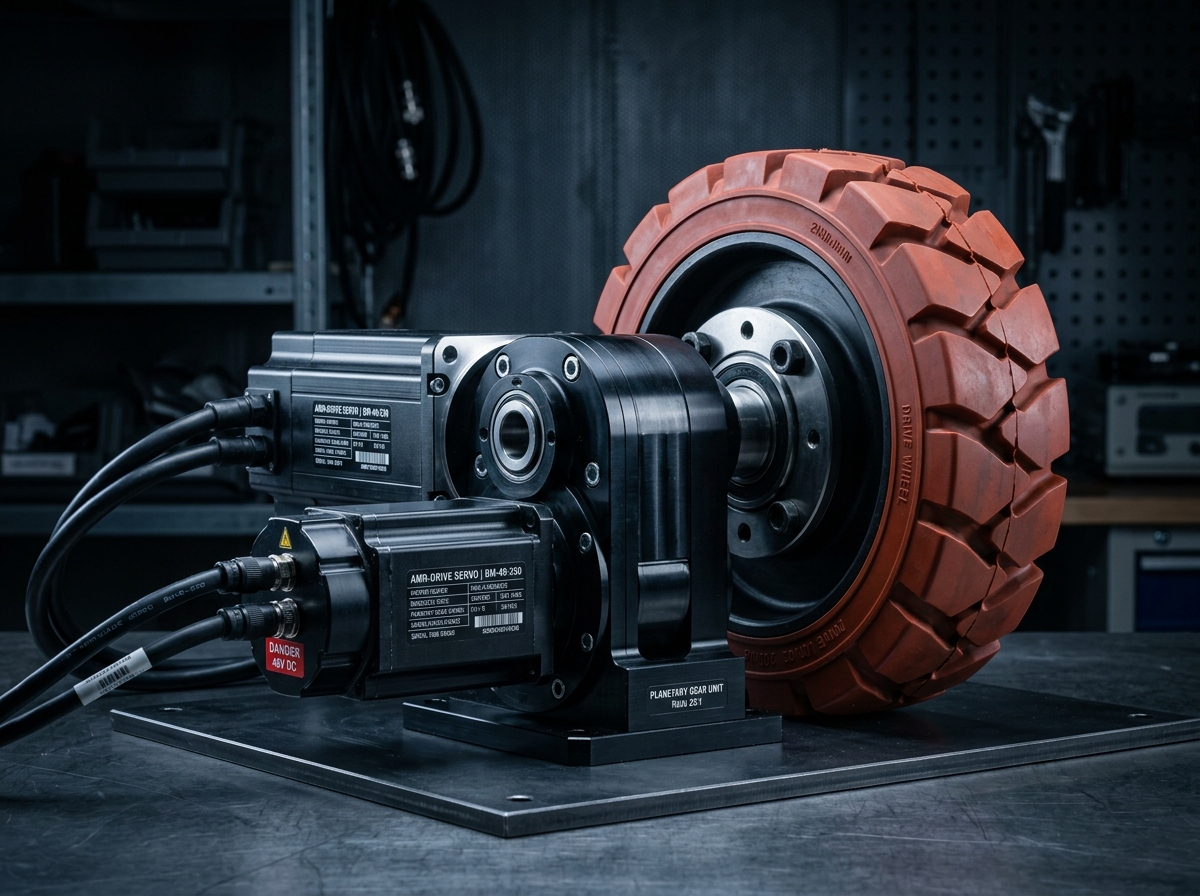
Drive Wheels industrial component
IND-WHL-DRV-200-BLDC
Verified
Robotic Wheels

Drive Wheels

Traction wheel unit with integrated planetary gearbox and electromagnetic brake.
Wheel Outer Diam…200 mm
Tread Width75 mm
Max Static Radia…850 kg
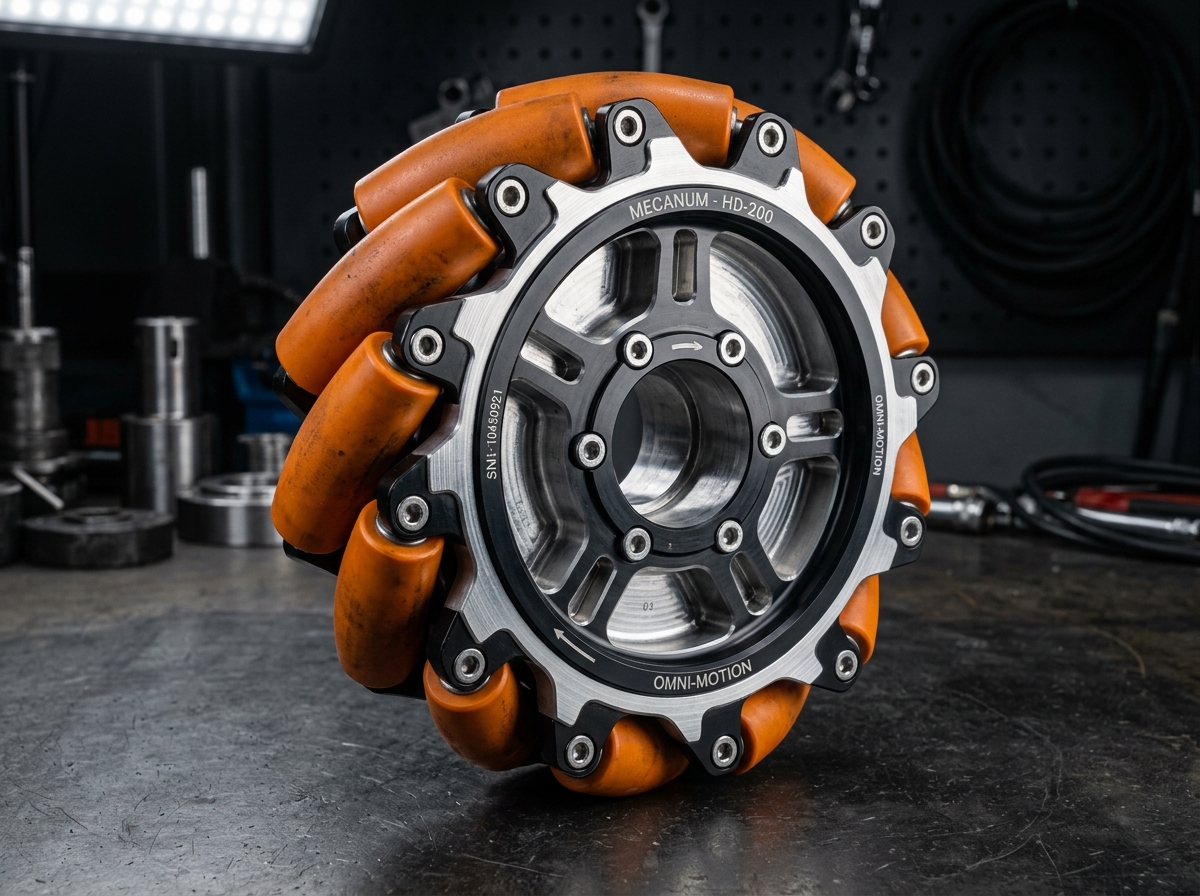
Omni Wheels industrial component
IND-WHL-OMN-150-SS
Verified
Robotic Wheels

Omni Wheels

Multi-roller wheel allowing forward traction while rolling freely in transverse directions.

Wheel Outer Diam…152 mm
Hub Width48 mm
Max Static Radia…350 kg
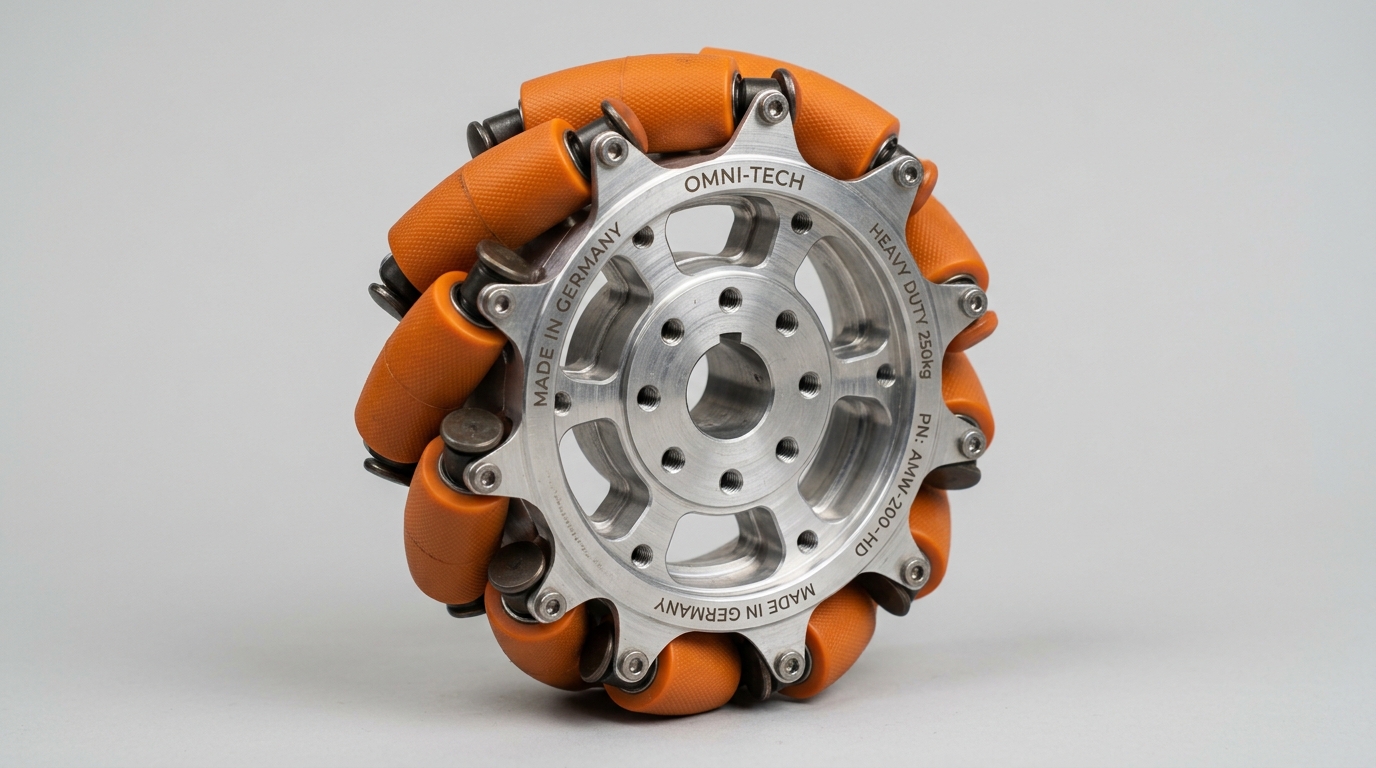
Mecanum Wheels industrial component
IND-WHL-MEC-204-HD
Verified
Robotic Wheels

Mecanum Wheels

45-degree angled roller wheel enabling full holonomic movement on flat industrial floors.
Wheel Outer Diam…203 mm
Overall Wheel Wi…85 mm
Max Static Payload650 kg
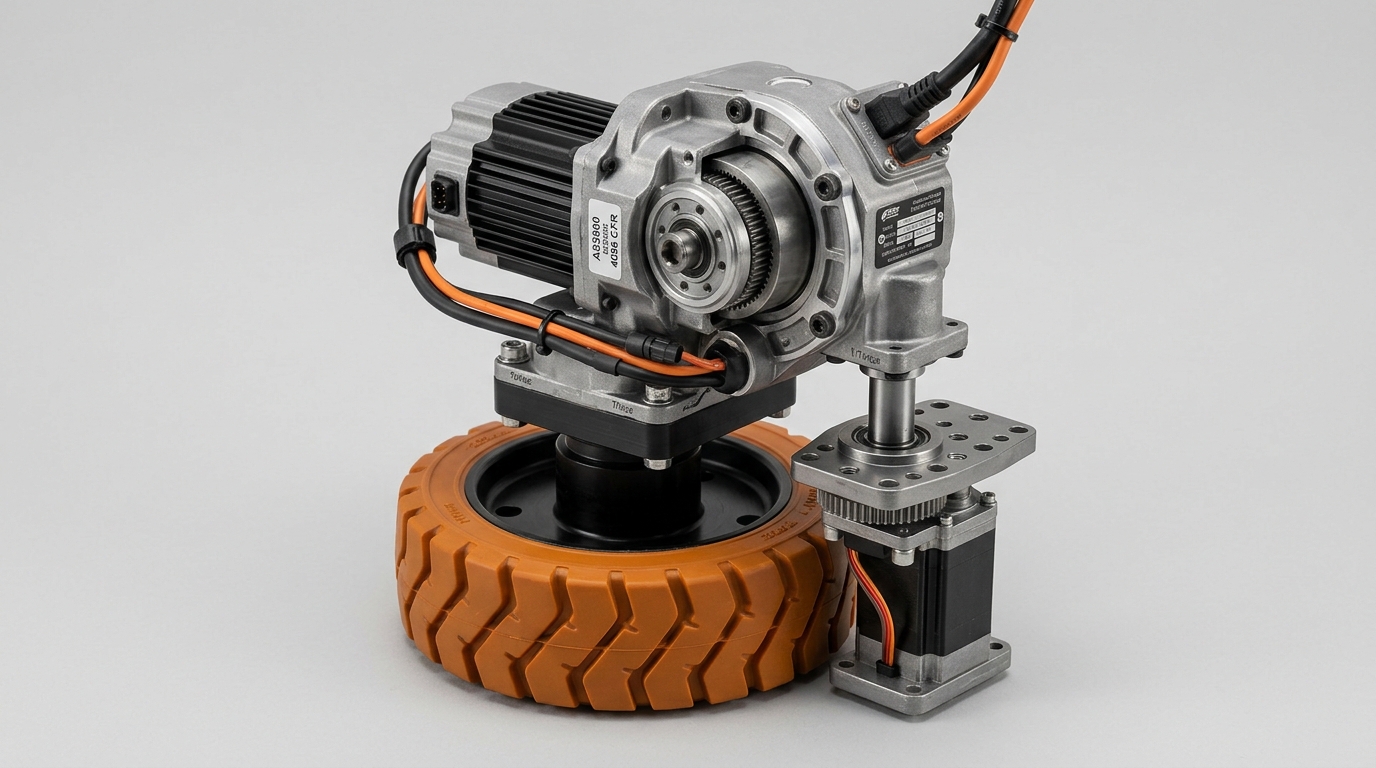
Mobile Robot Modules industrial component
IND-MOD-SWR-300-SD
Verified
Robotic Wheels

Mobile Robot Modules

All-in-one traction, steering, reduction, and feedback unit for fast vehicle chassis integration.

Max Wheel Load C…600 kg
Maximum Travel V…2.5 m/s
Continuous Tract…850 N
Section E: Engineering Specification

Technical Selection Guidance for Robotic Wheels

Specifying the appropriate robotic drivetrain and automation hardware requires a holistic evaluation of mechanical stiffness, duty cycle thermals, reflected inertia, and fieldbus communication latency.

Primary Engineering Selection Factors

Kinematic & Dynamic Verification
  • Maximum wheel load capacity under dynamic acceleration and braking
  • Floor conditions (surface friction, expansion joints, oil contamination, ramps)
  • Required vehicle travel speed and acceleration profiles
  • Steering geometry (differential, steerable drive, or omnidirectional Mecanum)
  • Battery voltage compatibility (24V / 48V DC) and motor power density

System Integration Considerations

Control Bus & Power Architecture
  • Payload per wheel and total platform mass
  • Floor surface, joints, ramps, and available traction
  • Required travel speed and acceleration profile
  • Manoeuvrability: turning radius or true omnidirectional movement
  • Drive configuration and how it maps to your navigation stack
Section F1: Field Deployment

Primary Industrial Applications

Validated manufacturing tasks where Robotic Wheels delivers proven precision and uptime.

Automotive

Production Verified

Electronics

Production Verified

Manufacturing

Production Verified

Logistics

Production Verified

Inspection

Production Verified
Application Engineering Support

Need Assistance Sizing Robotic Wheels?

Our application engineers can verify inertia ratios, motor torque curves, duty cycle thermals, and fieldbus synchronization parameters for your machinery before purchase.