High-Performance Industrial PC (IPC) Robot Controller
Central real-time kinematic coordination and high-level edge telemetry computation inside a fanless industrial chassis.
The logic that turns commands into coordinated motion.
Control systems close the loop between intent and movement. A command is issued, the controller plans the motion, drives deliver current to the motors, sensors report actual position and load, and the controller corrects continuously: command, control, motion, feedback, correction. Robot controllers, motion controllers, servo drives, PLCs, and feedback devices each own part of that loop, and they must share a common communication architecture to work as one machine.


Central real-time kinematic coordination and high-level edge telemetry computation inside a fanless industrial chassis.

Compact, low-cost motion control for automated laboratory instruments, medical pipetters, and semiconductor benchtop tools.

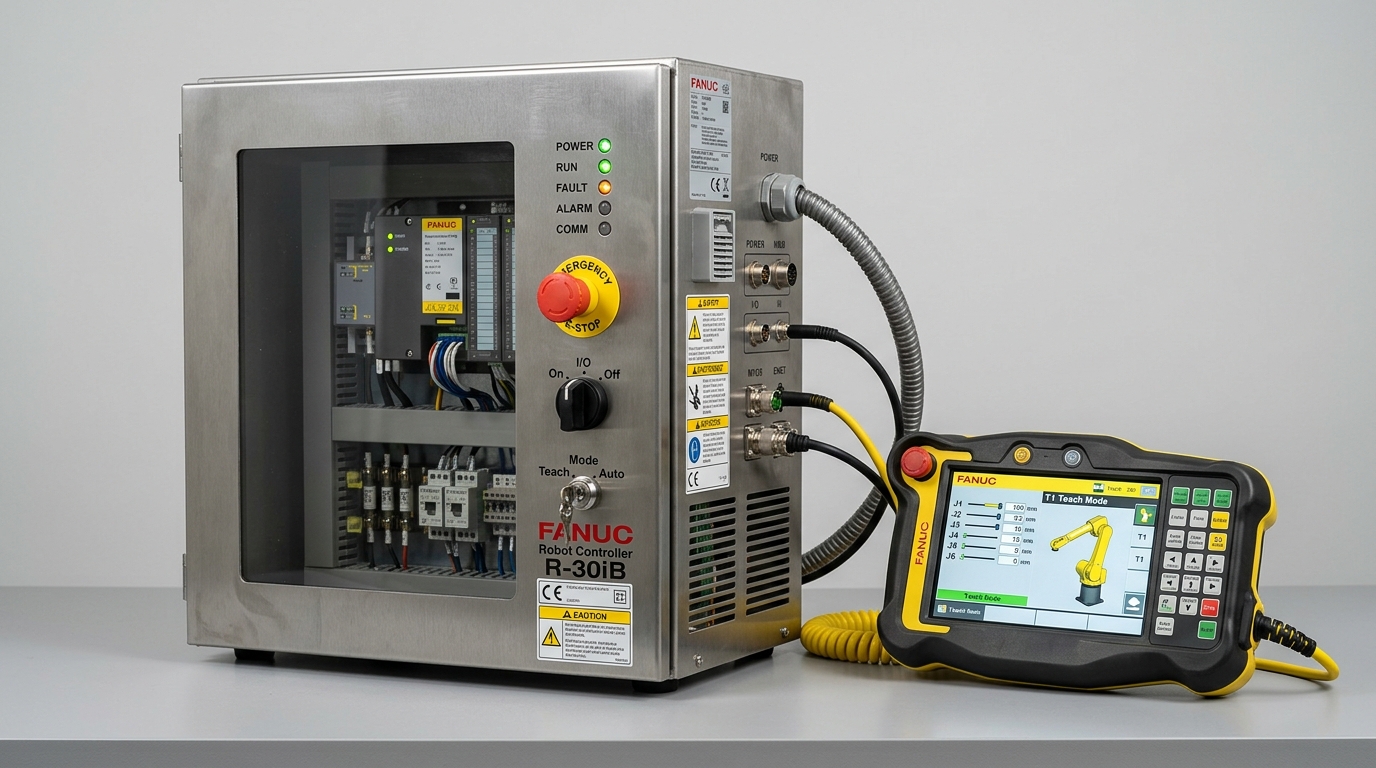
Complete plug-and-play controller cabinet including multi-axis inverter drives, safety PLC, and 10-inch color touchscreen pendant.

Allows academic robotics researchers and AI startups to run custom joint torque, impedance, and reinforcement learning policies.

Combines standard ISO 6983 G-code toolpath execution with high-speed electronic camming and rotary table interpolation.

Onboard vehicle autonomy computer combining 3D SLAM, obstacle dynamic avoidance, and warehouse traffic orchestration.

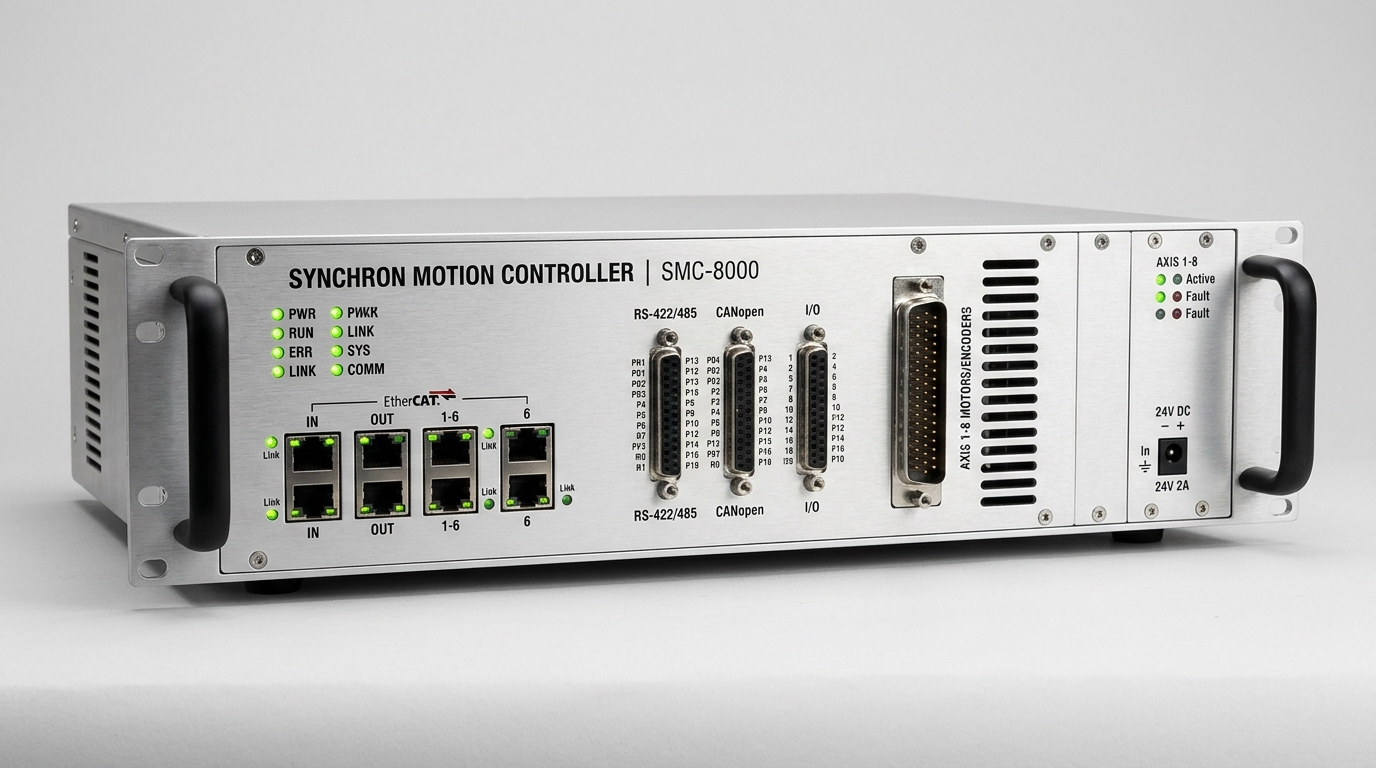
Synchronizes up to 64 physical servo axes with complex electronic camming, flying shears, and robot kinematics.

Dynamic trajectory generation and circular conveyor belt tracking for pick-and-place robots at up to 200 picks/minute.

Coordinates up to 4 robots sharing a single geometric workspace without collisions and with synchronized part handover.

Performs continuous dynamic visual servoing, updating robot trajectory in real time based on moving camera feedback.

Fits directly inside collaborative robot joints and mobile robot chassis, eliminating bulky external cabinet wiring.

Maximizes energy efficiency in multi-axis robotic workcells by exchanging regenerative braking energy across axes on a shared DC bus.

Interfacing with legacy CNC controls or specialized aerospace simulators requiring pure analog ±10V differential setpoints.

Drives two adjacent robot joint motors (e.g. Wrist Pitch and Yaw) from a single shared ultra-compact circular board.

Extreme high PWM switching frequency (up to 100 kHz) for ultra-low electrical latency and zero motor current ripple on slotless motors.

Certified Safe Motion functions (STO, SS1, SS2, SLS, SLI, SDI) executed directly in hardware over safety fieldbus without external relays.

Mounted directly onto the motor end-bell, eliminating motor power cables and reducing control cabinet size by 90%.

Supplies extreme peak sinusoidal current (up to 120A) to large-diameter frameless torque motors without overheating.

Direct linear motor control supporting both primary motor coil feedback and secondary linear optical glass scale feedback.

Pushes braking energy from decelerating heavy robots back into the plant 400V grid instead of dissipating it as cabinet waste heat.
Specifying the appropriate robotic drivetrain and automation hardware requires a holistic evaluation of mechanical stiffness, duty cycle thermals, reflected inertia, and fieldbus communication latency.
Validated manufacturing tasks where Control Systems delivers proven precision and uptime.
Automotive
Production VerifiedElectronics
Production VerifiedManufacturing
Production VerifiedLogistics
Production VerifiedInspection
Production VerifiedInteroperable motion components and engineering sizing utilities.
Our application engineers can verify inertia ratios, motor torque curves, duty cycle thermals, and fieldbus synchronization parameters for your machinery before purchase.